• Home
  • Scientific
    • Popularization
    • Papers
    • SpectroCalc
  • About me
  • Contact
Enter your keywords

You can read my Ph. D. thesis here:

  • UW REPOSITORY

22.2.22

Article: Angle-resolved optically detected magnetic resonance as a tool for strain determination in nanostructures

Authors: Aleksander Bogucki, Mateusz Goryca, Aleksandra Łopion, Wojciech Pacuski, Karolina E. Połczyńska, Jarosław Z. Domagała, Mateusz Tokarczyk, Tomasz Fąs, Andrzej Golnik, and Piotr Kossacki

Physical Review B 105, 075412 

Published 11 February 2022

https://doi.org/10.1103/PhysRevB.105.075412


Read more »
on 22.2.22
Share this!
Tags:
Articles
Newer Posts Newer Posts
Older Posts Older Posts

22.2.22

Article: Local field effects in ultrafast light–matter interaction measured by pump-probe spectroscopy of monolayer MoSe2

Authors: Aleksander Rodek, Thilo Hahn, Jacek Kasprzak, Tomasz Kazimierczuk, Karol Nogajewski, Karolina Ewa Połczyńska, Kenji Watanabe, Takashi Taniguchi, Tilmann Kuhn, Paweł Machnikowski, Marek Potemski, Daniel Wigger, Piotr Kossacki

Nanophotonics, vol. 10, no. 10, 2021, pp. 2717-2728

https://doi.org/10.1515/nanoph-2021-0194


Read more »
on 22.2.22
Share this!
Tags:
Articles
Newer Posts Newer Posts
Older Posts Older Posts

22.2.22

Article: Charged Exciton Dissociation Energy in (Cd,Mn)Te Quantum Wells with Variable Disorder and Carrier Density

Authors: Aleksandra Łopion, Aleksander Bogucki, Karolina Ewa Połczyńska, Wojciech Pacuski, Andrzej Golnik, Tomasz Kazimierczuk, Piotr Kossacki

Journal of Electronic Materials volume 49, pages4512–4517 (2020)

https://doi.org/10.1007/s11664-020-08181-z


Read more »
on 22.2.22
Share this!
Tags:
Articles
Newer Posts Newer Posts
Older Posts Older Posts

22.2.22

Article: Polarization and magneto-optical properties of excitonic emission from wurtzite CdTe/(Cd,Mg)Te core/shell nanowires

Authors: Jakub Płachta, Anna Kaleta, Sławomir Kret, Tomasz Kazimierczuk, Karolina Połczyńska, Piotr Kossacki, Grzegorz Karczewski, Tomasz Wojtowicz, Jacek Kossut and Piotr Wojnar

Nanotechnology Volume 31 Number 21

Published 10 March 2020

https://doi.org/10.1088/1361-6528/ab7589


Read more »
on 22.2.22
Share this!
Tags:
Articles
Newer Posts Newer Posts
Older Posts Older Posts

22.2.22

Article: Narrow excitonic lines and large-scale homogeneity of transition-metal dichalcogenide monolayers grown by molecular beam epitaxy on hexagonal boron nitride

 Authors: Wojciech Pacuski, Magdalena Grzeszczyk, Karol Nogajewski, Aleksander Bogucki, Kacper Oreszczuk, Julia Kucharek, Karolina E Połczyńska, Bartłomiej Seredyński, Aleksander Rodek, Rafał Bożek, Takashi Taniguchi, Kenji Watanabe, Slawomir Kret, Janusz Sadowski, Tomasz Kazimierczuk, Marek Potemski, Piotr Kossacki

Nano Letters 2020 20 (5), 3058-3066

DOI: 10.1021/acs.nanolett.9b04998


Read more »
on 22.2.22
Share this!
Tags:
Articles
Newer Posts Newer Posts
Older Posts Older Posts

22.2.22

Article: Distributed Bragg reflector made of CdSe and ZnTe

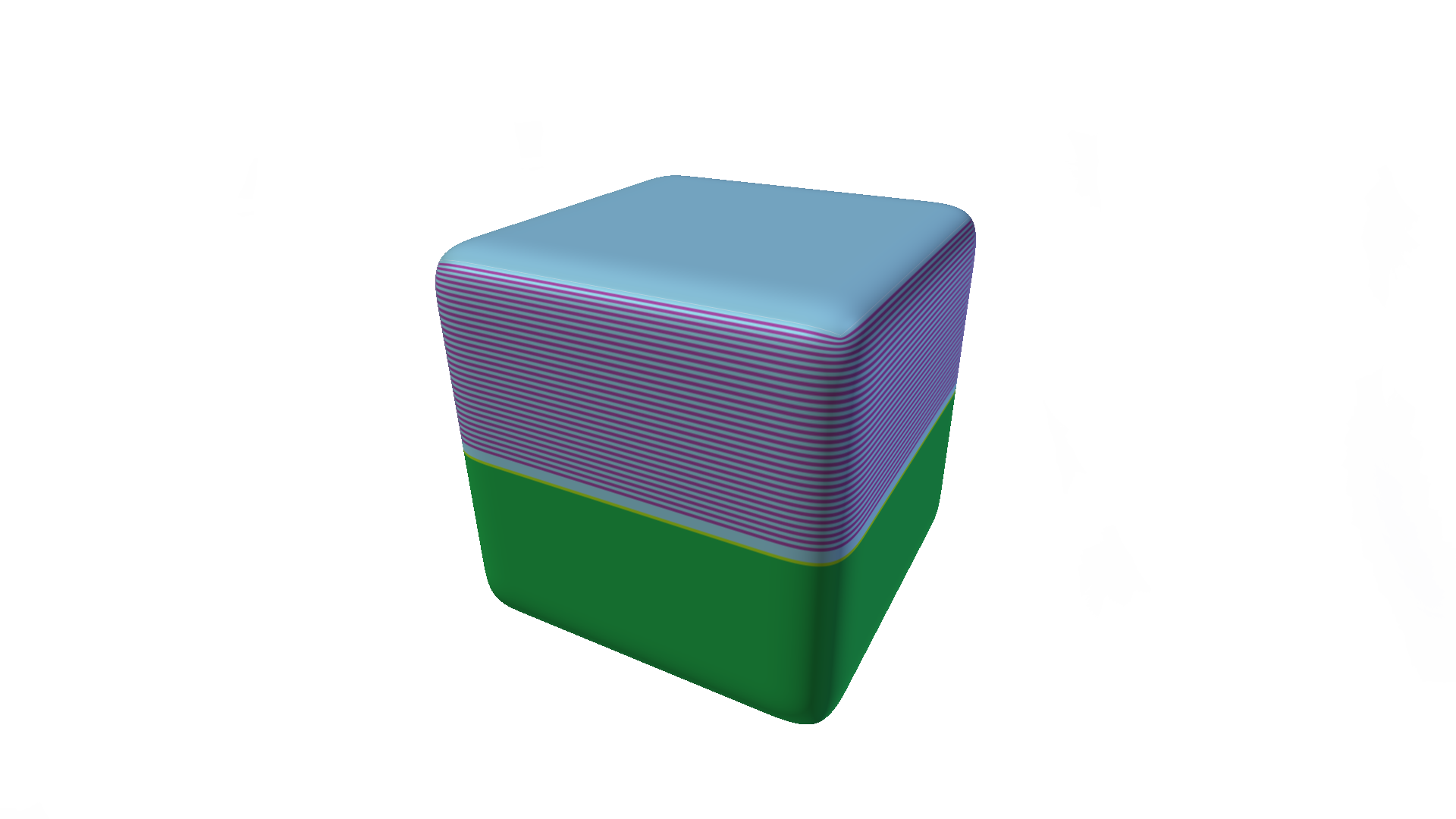
DBR scheme

A distributed Bragg reflector (DBR) is a high-quality mirror based on alternating layers with high and low refractive indices. To grow an epitaxial DBR both layers should have the same lattice parameter. Although for III-V DBRs there is a pair of almost lattice-matched materials with significantly different refractive indices: GaAs and AlAs, for II-VI semiconductors, all lattice-matched DBRs required so far growth of ternary or even quaternary compounds or complex digital alloys to fulfill the requirement of lattice matching. Here we propose a much simpler approach with only binary compounds, an almost lattice-matched DBR made of CdSe and ZnTe.

Several properties of our DBR are different from II-VI DBRs grown so far. Firstly, our DBR does not include magnesium, so it is not hygroscopic and it should be stable for years even outdoors, which can be important e.g. in solar cell applications. Secondly, the layer with a lower refractive index is also one with a lower energy gap. It is an exceptional situation because usually, semiconductors with high energy gap have a low refractive index, which is not true for considered pair of materials: ZnTe (Eg = 2.4 eV, n = 2.9) and CdSe (Eg = 1.7 eV, n = 2.6). Consequently, refractive index difference (a crucial parameter for DBRs) is increasing for long wavelengths and decreases close to the energy gap short wavelength, which is unusual for semiconductor DBRs. From a practical point of view, it is important that both materials have similar lattice constant, which is 0.608 nm for ZnTe and 0.605 nm for CdSe, and both materials can be epitaxially grown in a zinc blende structure.

We realized a new kind of DBR using molecular beam epitaxy (MBE) assisted with in-situ reflectivity. On top of GaAs or almost lattice-matched GaSb substrate we grew 20-30 pairs of CdSe and ZnTe. In reflectance spectra we obtained stop-band width of about 50 nm and reflectance over 95% if the stop-band is in the spectral range between 900 and 1700 nm (see Fig. 1). Since several optical properties are known only for wurtzite CdSe, therefore we use our relatively thick structures to determine optical parameters of zinc blende CdSe. In particular analytical formula for the refractive index of zinc blende CdSe was obtained by fit to experimental data.

 Authors: K. E. Połczyńska, K.Sobczak, W.Pacuski

Superlattices and Microstructures

Volume 139, March 2020, 106422

https://doi.org/10.1016/j.spmi.2020.106422

Read more »
on 22.2.22
Share this!
Tags:
Articles, Slider
Newer Posts Newer Posts
Older Posts Older Posts

22.2.22

Article: Coupling of Quantum Dots with Quantum Wells in a System Based on (Cd,Zn,Mg)Te

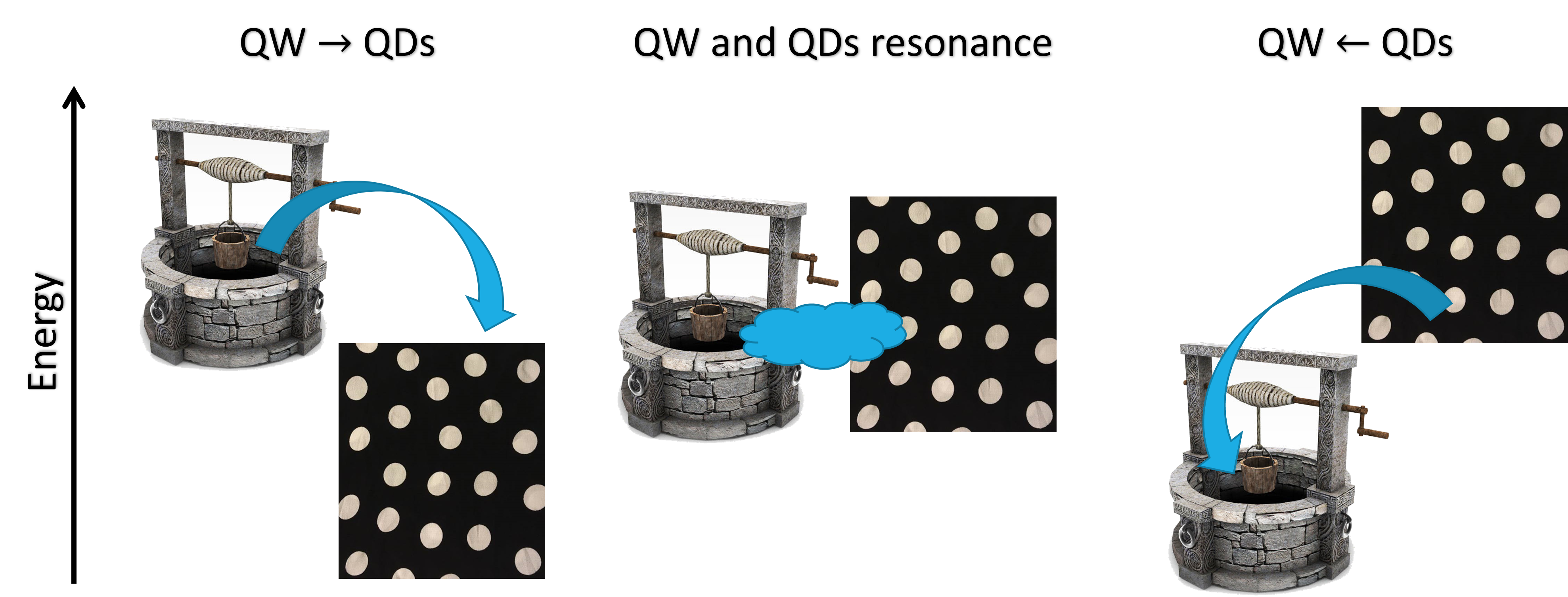
QWs QDs

Coupled quantum systems are very desirable structures due to potential applications in spintronics and quantum computing. Particularly interesting are coupled objects with different dimensionality like quantum wells (QWs) –2D structures and quantum dots (QDs) –0D structures. By combining such different objects one can think about an unusual combination of physical properties. For example, spin relaxation in QWs is very fast but it is rather low in QDs. Therefore structure with coupled QWs and QDs could be used for efficient spin orientation of carriers in QWs and further injection of such polarized carriers to QD where spin will be preserved for a long time. Polarization of carriers in QDs can be subsequently transferred to magnetic ions and in particular to a single magnetic ion in a QD.

However, for efficient tunneling QW energy should be equal to or slightly larger than QDs energy but due to quantum confinement larger objects like QWs exhibit typically higher energy than smaller objects like QDs. Moreover, QWs should be not strained too much while QDs are typically formed in strained structure. Therefore it is difficult to find a good material combination for the realization of coupled QWs and QDs.

We propose coupled QWs and QW dots based on the (Cd, Mg)Te system, where QW is made of (Cd, Mn, Mg)Te with low Mg content, the barrier is made of (Cd, Mg)Te with high Mg content, and QDs are made of CdTe:Mn. Our system is realized using molecular beam epitaxy and investigation is based on optical spectroscopy at low temperatures. Optical spectra confirm that the energy of obtained QWs is slightly higher than the energy of QDs. Moreover, in a series of samples with various positions of QD versus QWs we observe either rapid transfer of energy from QWs to QDs, or efficient luminescence of QWs.

Authors: K. Połczyńska, E. Janik, P. Kossacki and W. Pacuski

ACTA PHYSICA POLONICA A

Vol. 132 (2017)

DOI: 10.12693/APhysPolA.132.369

Read more »
on 22.2.22
Share this!
Tags:
Articles
Newer Posts Newer Posts
Older Posts Older Posts
Newer Posts Older Posts Home
Subscribe to: Comments (Atom)

Karolina Ewa Połczyńska

K. E. Połczyńska
Ph. D. in Physics. MBE grower. Quantum dot's enthusiast specialized in solotronics.

Check out my work

  • Google Scholar
  • ResearchGate
  • Orcid
  • Web of science
  • Scopus

My free android app

SpectroCalc
Introducing SpectroCalc: your go-to tool for seamlessly converting between different units in spectroscopy! Whether you're analyzing a spectrum and need to know the equivalent wavelength in energy (eV), or if you're in a lecture and the presenter is using wavenumbers (1/cm) but you prefer to think in nanometers, SpectroCalc has got you covered!

Ph. D. thesis

Ph. D. thesis

Twitter

Finally, the thesis has been submitted, and all exams have been successfully completed. Now awaiting the reviews... Exciting times as the day of defense approaches this autumn! Fingers crossed for a positive outcome. Enjoy the attached cover below! pic.twitter.com/ByoZmYADjf

— Karolina Połczyńska (@kepolczynska) July 7, 2023

Web of Science

Follow @kepolczynska

Ph. D. Students Council

  • University of Warsaw
  • Faculty of Physics
  • WKNKO2 Conference

Archive

Popular post

  • My Ph. D. Thesis
    For a long time in the industry of electronics, the goal of increasing the efficiency of a device was as important as decreasing its size. T...

Search

Popular posts

  • My Ph. D. Thesis
    For a long time in the industry of electronics, the goal of increasing the efficiency of a device was as important as decreasing its size. T...
  • Postdoc
    Ladies and Gentleman,  I am thrilled to announce that since the 1st of February, I have been a Postdoctoral Researcher at the Technical Univ...
  • Article: Carrier localization in defected areas of (Cd, Mn)Te quantum well investigated via Optically Detected Magnetic Resonance employed in the microscale
      The object of examination is the effect of carrier localization on three properties sensitive to carrier gas density at the micrometer sca...

Tags

Articles Ph. D. Students Council Popularization Slice of life

My hobby - art :)

My hobby - art :)
Powered by Blogger.
Ⓒ 2018 Karolina Ewa Połczyńska. Design created with by: Brand&Blogger. All rights reserved.